What Is Cross Efficiency and Why It Matters for Speed
Learn how cross efficiency cuts your Rubik's Cube solve time by reducing white cross moves from 10-15 down to 6-8 with simple planning habits.
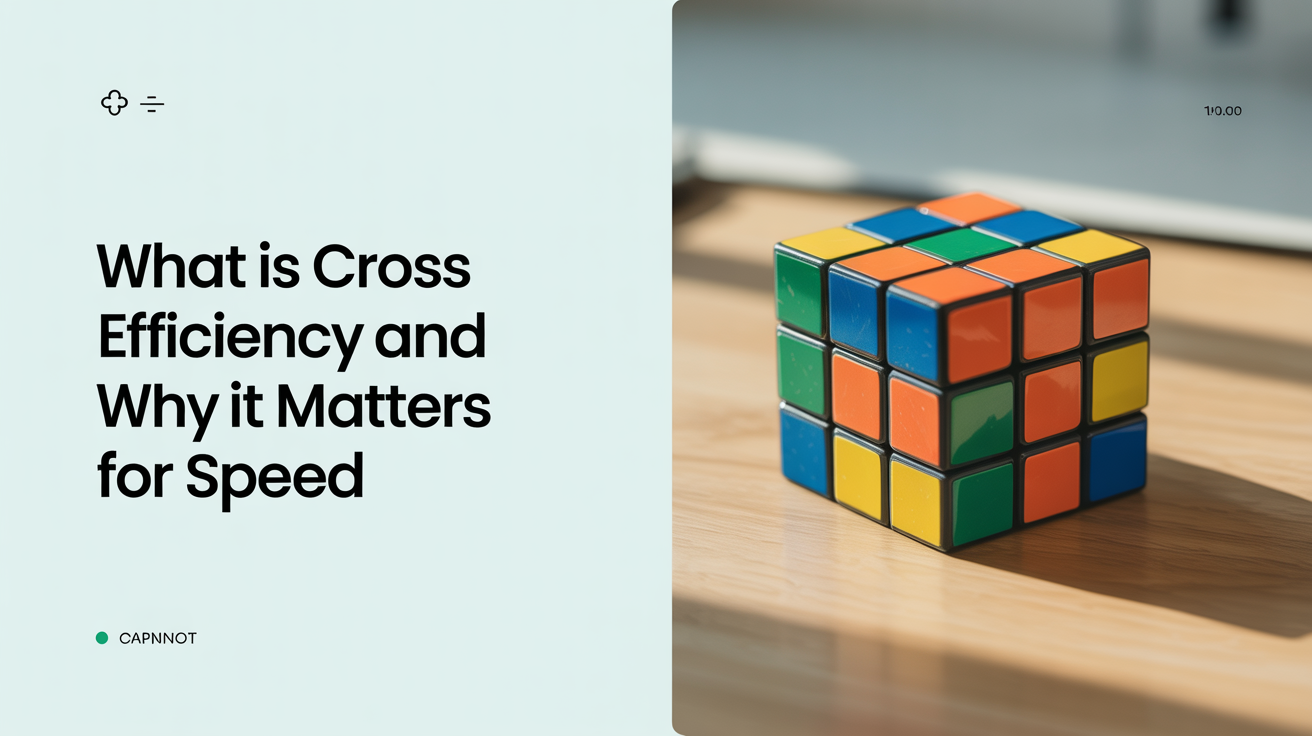
When you first learn to solve the white cross, you mostly place one piece at a time and rotate the cube constantly to get a better view. That approach works, but it costs you moves. Most beginners use 10 to 15 moves for the cross, and a well-planned cross can be done in 6 to 8. That gap is exactly what cross efficiency is about.
Before you invest hours drilling algorithms, improving cross efficiency is one of the most direct ways to drop time from every solve.
What Cross Efficiency Actually Means
Cross efficiency is a measure of how many moves you use to place all four white edge pieces relative to the minimum possible. A lower move count generally means a faster cross, less wasted effort, and more time left for the rest of the solve.
It has two components:
- Move count, the total number of turns to place all four white edges on the bottom face with the correct colors matched to the center pieces
- Planning, figuring out a sequence before you start turning, so you are not reacting move-by-move
Efficient solvers do not just "see" a faster path by magic. They learn to read the cube's state before touching it, then execute a plan rather than improvise.
Why the Cross Matters More Than Any Other Step
The cross sets up everything that follows. A poorly built cross means your first layer corners are harder to insert, and a sloppy cross can undo work if you need to rotate away from a piece you already placed.
More practically, the cross is the only step where extra seconds disappear quietly. F2L (first two layers), OLL, and PLL have defined algorithms, so efficiency there comes from recognition speed and finger tricks. The cross has no single algorithm, which is why planning pays off.
If your cross takes 12 moves when 7 would do, you are burning time in every single solve. Across a session of 50 solves, that adds up quickly.
How to Measure Your Own Cross Move Count
You cannot improve what you are not tracking. Here is a simple drill:
- Scramble the cube and hold it with the white face on the bottom.
- Before you turn anything, look at where all four white edge pieces are.
- Solve the cross, counting every turn (quarter turns and half turns each count as one move).
- Write the number down.
Do this 10 times in a row and average the counts. A typical beginner scores 11 to 14. A solid intermediate score is 7 to 9. Aiming below 8 consistently is a reasonable medium-term goal before worrying about F2L or algorithm upgrades.
You do not need special software for this drill. A tally in a notebook works fine.
Planning One or Two Moves Ahead
You do not need to see the entire cross solution before you start. Planning 1 to 2 moves ahead is enough to meaningfully cut your move count, and it is a skill you can build gradually.
Start with one piece at a time, but look ahead. When you are placing the first white edge, glance at where the second one sits. Ask yourself: will the moves I am about to do disturb it or bring it closer?
Look for pieces that solve together. Some white edge pieces are already adjacent to each other in a way that a single move places both, or one move sets up an easy follow-up. These "dual solutions" become visible once you slow down and look before turning.
Practice with a scrambled cube in your hands but no turning. Just look. Try to spot all four white edges, note which face they are on, and think about what needs to happen to each one. At first, 15 to 20 seconds of inspection before a timed solve is perfectly normal.
Spotting Cross Pieces Without Rotating the Cube
Constant cube rotation is one of the biggest move-count inflators for beginners. Each rotation is technically free in terms of algorithm moves, but it interrupts your lookahead and can send you chasing pieces across the cube.
To reduce rotations:
- Learn to read each face from the current angle. With the white face down, you can see the bottom, the front, and two side faces without rotating. That covers most of where cross pieces hide.
- Use
U,F,B,R,Lmoves instead of rotations when possible. Repositioning a piece with a face turn preserves your grip and keeps the cube stable, which is faster in practice. - Practice the "no rotation" rule for short stretches. Set a timer for 5 minutes and solve only the cross, forcing yourself not to rotate the cube at all. You will find clunky workarounds at first, but over time you learn natural ways to pull pieces into position from any angle.
This habit also builds spatial awareness, which pays dividends when you eventually move to more advanced F2L recognition.
A Simple Cross Drill to Practice Efficiency
| Drill | Goal | Duration |
|---|---|---|
| Count-your-moves | Track average cross move count over 10 solves | 10 minutes |
| No-rotation cross | Solve cross without any cube rotations | 10 minutes |
| Pre-solve inspection | Hold for 10 seconds before each solve, plan two moves | 15 minutes |
| Pair-spotting | Identify two cross edges that can be solved with one setup move | 10 minutes |
Run one drill per practice session rather than all four at once. The goal is to build one habit at a time until each becomes automatic.
For a broader plan on when to work these drills into your sessions, see a realistic practice routine to lower your times.
Cross Efficiency in Context
Getting from a 13-move average to an 8-move average cross will not happen in one session. It typically takes a few weeks of deliberate practice before the planning reflex feels natural. But the work compounds: every habit you build here makes everything after the cross easier to speed up.
For a refresher on the mechanics of the cross itself, step 1: how to solve the white cross covers the fundamentals you need in place before drilling efficiency.
Once you have your cross move count below 9 consistently, you will notice the rest of your solve feeling less rushed. That mental space is what lets the next improvements take hold. For a broader look at improving your full solve, see how to get faster solve times as a beginner.
Frequently Asked Questions
How many moves should the white cross take? For beginners, 10 to 14 is common. A solid beginner target is 8 to 10 moves. Advanced solvers often reach 6 to 7. There is no single "right" number, but tracking your count and nudging it down is the goal.
Does cross efficiency matter if I am not competing? Yes, in a practical sense. A shorter cross means less time spent on the first step, which makes every solve feel smoother and less tiring. You do not have to compete to benefit from better habits.
Should I learn to solve the cross on any color, not just white? Eventually, yes. Solving on any color (called "color neutral") lets you pick whichever cross is easiest for a given scramble. But while you are still working on cross efficiency, sticking to one color (usually white) helps you build a clear mental model before adding that complexity.
Why does the cross take more moves when I try to plan ahead? At first, planning can actually slow you down and increase moves because you are thinking in unfamiliar ways. This is normal. The cognitive overhead drops with practice, and your move count will fall once the pattern recognition becomes automatic.
What is a good inspection time before starting the cross? In casual practice, however long you need is fine. If you ever time yourself with official rules in mind, the WCA (World Cube Association) allows 15 seconds of inspection. Most people find that 8 to 12 seconds is enough to plan 2 to 3 cross pieces once they have practiced this habit.