How to Lube a Speed Cube (and Why)
Learn how to lube a speed cube the right way — which products to use, how to apply them, and why lubing transforms a scratchy cube into a smooth solver.
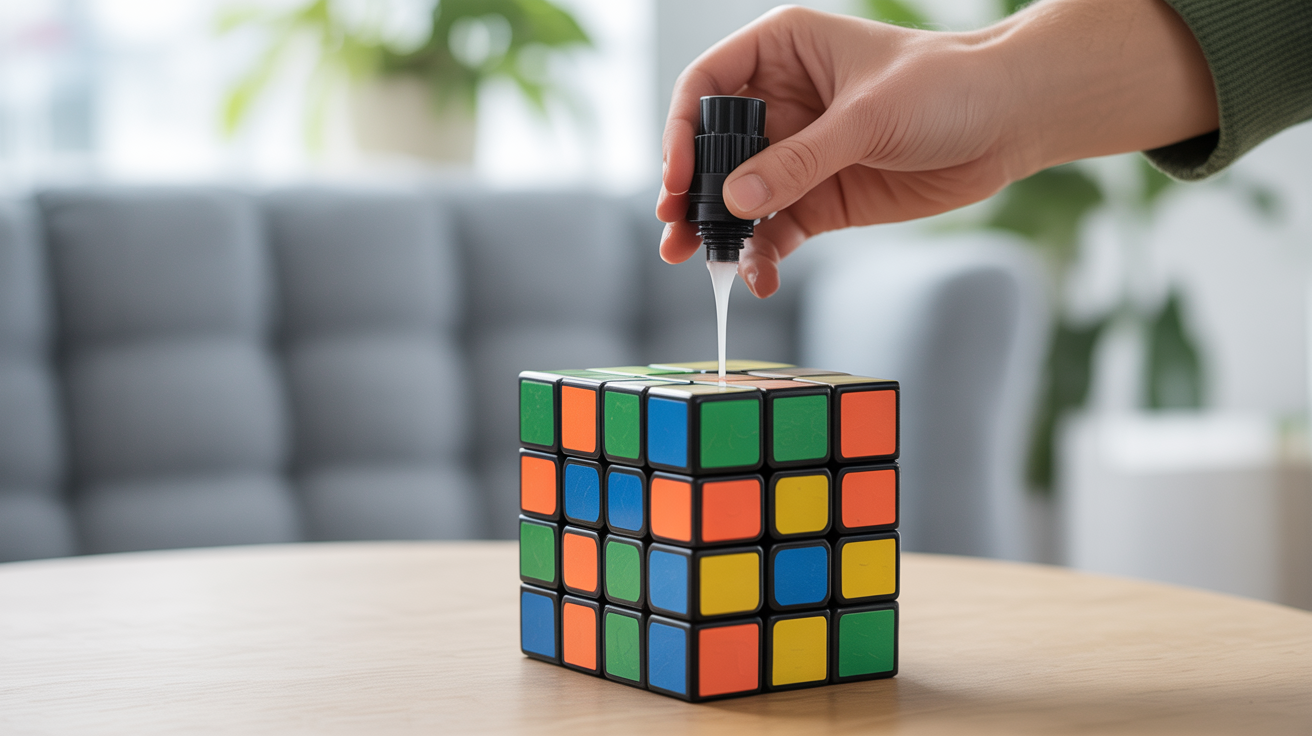
A well-lubed cube feels like a completely different puzzle. Turns flow instead of grinding, the plastic stops screaming on every move, and the whole solving experience becomes noticeably more enjoyable. The good news is that lubing a speed cube takes about ten minutes and costs almost nothing once you have the right products.
This guide covers why lube matters, what types to use, and exactly how to apply them. Whether you want a two-minute quick fix or a full inside-out treatment, the process is straightforward.
At a Glance
- Use silicone-based lube only. Petroleum products (WD-40, petroleum jelly, cooking oil) degrade cube plastic permanently.
- Thick (viscous) lube goes on the core and springs; thin lube goes on the piece contact surfaces. They do different jobs.
- The quick drop-and-turn method takes under two minutes; a partial disassembly gets lube where it actually matters and takes about ten.
- Lubrication is explicitly permitted under WCA competition rules, so there is no reason to hold off on maintaining a cube you plan to compete with.
- Casual solvers typically re-lube every two to three months; daily competitive practice can mean weekly.
- Over-lubing, not under-lubing, is the most common beginner mistake, and it is easy to fix by turning the cube hard for a few minutes.
Why Lubing a Speed Cube Matters
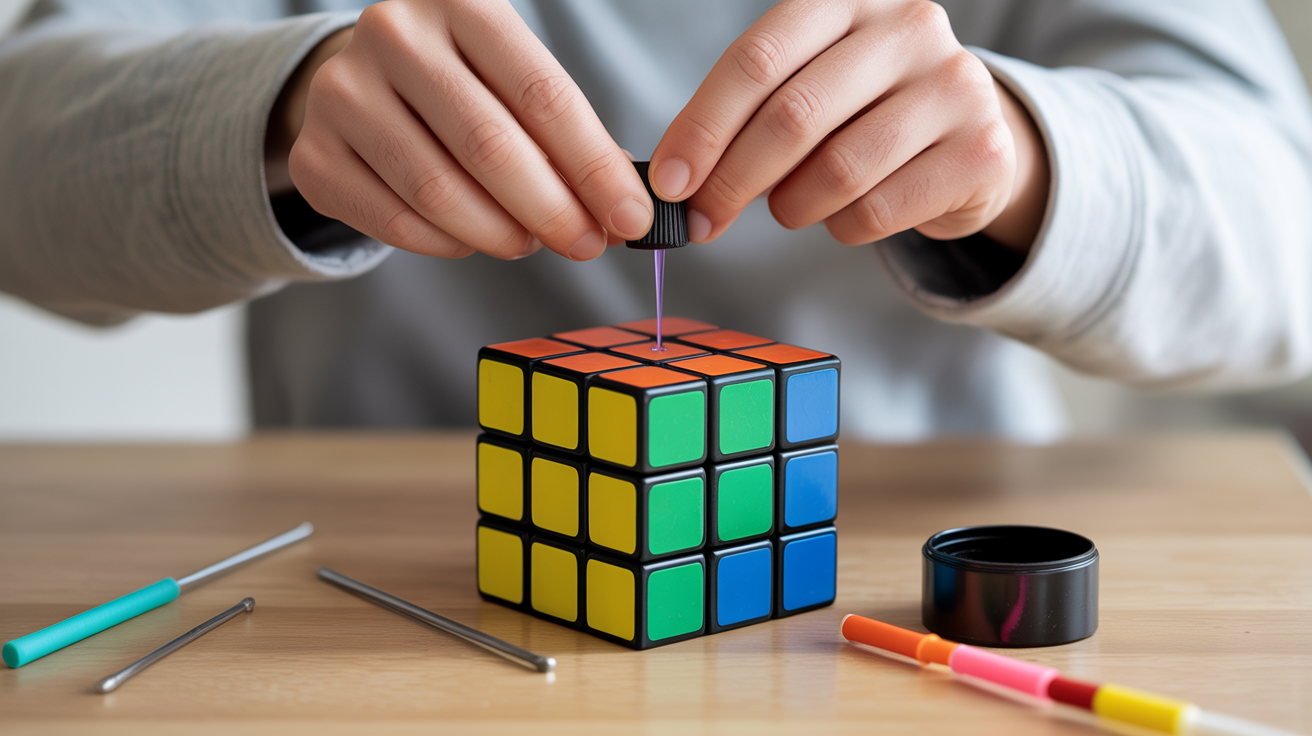
Most beginners assume a stiff or scratchy cube is just... a stiff cube. Often it is not. The internal plastic pieces rub against each other and against the core with every turn. Without lubrication that friction builds up, which slows you down and wears the plastic faster over time.
Good lubrication does three things:
- Smooths the feel so pieces glide rather than catch
- Controls turning speed depending on what you apply where
- Reduces noise so that loud scratching sound disappears quickly
New cubes sometimes come with a factory lubricant that feels thick and tacky. That coating is not designed for long-term performance. After a few hundred solves it wears thin and uneven, and the cube starts to feel worse than it did on day one. A fresh application of proper lube fixes this immediately.
Is Lubing Allowed in Competition?
Yes, and it is worth knowing this if you are new to the hobby and worried about "modifying" your cube. The World Cube Association's regulations explicitly permit internal refinements, stating that puzzles may be refined by sanding, lubrication, or modifications that improve stability, such as adding magnets. Lubing is not a workaround or a hack. It is a normal, sanctioned part of maintaining a speedcubing puzzle, whether you are practicing at home or preparing for an official event.
Breaking In a New Cube
Before you lube anything, understand that brand-new speed cubes benefit from a break-in period. Do 200 to 300 casual solves first. The plastic pieces wear very slightly against each other and the cube loosens up naturally. After break-in, a light lube application makes a dramatic difference. Skipping straight to lubing on day one is fine too, but you may find you need to reapply sooner as the plastic settles.
Which Lube Goes Where
This is the part that trips up most beginners. There is not one universal lube. There are two broad categories, and they go in different places for different reasons.
Thick Lube for the Core and Springs
The core is the central piece that all the other pieces rotate around. It contains metal springs that push the pieces outward and give the cube its tension. Heavy, viscous lubes (sometimes called core lubes or spring lubes) belong here. They act as a damper, stabilizing the cube and making it feel controlled rather than loose and rattly.
Thick lube on the springs also prevents a squeaking sound that develops when metal rubs metal. A tiny amount goes a long way. Too much and the cube feels sluggish and unresponsive.
Thin Lube for the Pieces
The colored sticker caps (or stickerless colored plastic) sit on top of the moving pieces. The pieces themselves slide along tracks inside the cube on every turn. A thin, fast-flowing lube belongs on these contact surfaces, typically the inner faces of the pieces and the feet that slide along the core's ridges.
Thin lube speeds up the plastic-on-plastic contact. It makes the cube feel snappy and fast. Beginners often over-apply here and end up with a cube that feels sloppy: turns overshoot and pieces pop out too easily. Start with the smallest amount you can manage, roughly a pinhead-sized drop per contact point, and add more only after you have felt the result of that amount.
Always Use Silicone-Based Lube
One rule that is non-negotiable: use silicone-based lubricants made for puzzle cubes. Do not use WD-40, petroleum jelly, cooking oils, or any oil-based household product. Petroleum-based lubricants break down the plastic and cause permanent damage. The pieces can crack, warp, or become permanently sticky. Silicone is safe for the plastic and lasts significantly longer.
The reason comes down to chemistry, not preference. Silicone grease is prized precisely because it is chemically inert and safe on materials that petroleum-based lubricants attack, which is why it is standard in applications like faucet seals and dry-suit gaskets where a petroleum product would degrade the rubber or plastic on contact. Cube plastic (usually ABS or similar polymers) behaves the same way: silicone sits on the surface and does its job without reacting with it, while petroleum-based oils and greases can soften or swell the plastic over weeks of contact.
Cube-specific silicone lubes are sold by puzzle hardware suppliers in small dropper bottles. You do not need anything expensive. A couple of inexpensive bottles, one thick and one thin, covers everything on this list.
Lube Viscosity Quick Reference
| Lube type | Where it goes | Effect on feel | Reapply how often |
|---|---|---|---|
| Thin / low-viscosity | Piece contact surfaces, feet, tracks | Fast, snappy, light | Every 4-8 weeks with regular use |
| Medium / all-purpose | Anywhere, as a single-bottle compromise | Balanced, neither fast nor stabilized | Every 6-10 weeks |
| Thick / spring lube | Core springs, center mechanism | Controlled, stable, quiet | Every 3-6 months, or when springs start to squeak |
| Petroleum-based (WD-40, etc.) | Nowhere on a cube | Damages plastic within days to weeks | Never |
How to Lube a Speed Cube: Step-by-Step
There are two methods. The quick method takes under two minutes. The thorough method involves a partial disassembly and gives much better results. Try the quick method first if you have never lubed a cube before.
Method 1: The Quick Drop-and-Turn
No disassembly required. Best for a light maintenance application on a cube that already feels reasonable.
- Hold the cube in solved position.
- Locate the gaps between any face layer and the adjacent layers. You will see them clearly if you slightly offset one face.
- Add two to three drops of thin lube into these gaps on two or three sides of the cube.
- Reassemble into solved state and do 100 quick turns in all directions. The lube spreads as the pieces move.
- Wipe away any lube that oozes out onto the surface.
- Evaluate the feel. If it still feels dry or scratchy, add one more drop and repeat the turning.
This method does not reach the core or springs, so it is really just a surface treatment. It improves piece feel but does not fix spring squeak or core instability.
Method 2: Partial Disassembly (Recommended)
This gets lube where it actually matters. You only need to pop out one piece to open the cube up enough to work inside.
- Twist any face 45 degrees so one edge piece pops up slightly out of the cube.
- Use your thumb to push that edge piece out. The cube is now open and you can see the core and the inner faces of the surrounding pieces.
- Apply one small drop of thick lube to each spring. There are six, one per face center. Rotate each center piece so the lube coats the spring fully.
- Apply thin lube to the inner feet and contact surfaces of the surrounding pieces. A drop on a finger and a light wipe across the surfaces is enough.
- Replace the edge piece, twist the face back, and do 200 fast turns.
- Let the cube sit for ten minutes, then do another 100 turns. Some lubes need time to settle before the feel stabilizes.
For a complete disassembly, removing every piece to lube each one individually, the process is the same but takes longer, usually 15 to 20 minutes for a 3x3. It is worth doing once when you first set up a new cube properly. After that, Method 2 handles routine maintenance easily.
Common Mistakes When Lubing
Using Too Much
Over-lubing is the most common beginner error. Excess lube makes a cube feel slow, unresponsive, and gummy. The pieces seem to stick mid-turn rather than flow through. If this happens, turn the cube aggressively for several minutes so the lube distributes and some works its way out. In severe cases, a partial disassembly and wipe-down with a dry cloth helps. As a rule of thumb, if you cannot remember exactly how many drops you used, you probably used too many.
Lubing Without Tensioning
Lube and tension are two separate adjustments, and they interact. A cube that is lubed but has incorrect tension will still feel wrong. Too loose and pieces pop out; too tight and it stays stiff regardless of how much lube you add. If you want to dial in a cube fully, handle tensioning first and then lube. See how to tension a speed cube for a complete walkthrough on getting those screws set right.
Choosing the Wrong Cube in the First Place
Even perfect lubing cannot fully fix a low-quality cube with poor tolerances. If you are starting out and shopping for your first proper speed cube, check out how to choose your first speed cube before investing time in the setup process. A decent mid-range cube will respond to lube dramatically better than a cheap toy-grade one.
Using Petroleum Products
Covered above, but worth repeating: WD-40 and similar sprays are not cube lubes. They will feel great for about a day and then the plastic starts to degrade, often showing up as a slightly tacky or gummy residue that no amount of wiping fixes. Use silicone only.
How Often Should You Re-Lube?
It depends on how much you solve. A casual solver doing 20 to 30 solves a week might re-lube every two to three months. Someone doing competitive training with several hundred solves a day might re-lube weekly. The cube tells you when it is time: when turns start feeling scratchy, dry, or noticeably slower than usual, that is the signal.
Magnetic cubes have an extra consideration. The magnets themselves do not need lube, but the pieces surrounding them do. A light application of thin lube around the magnet inserts keeps them quiet and the feel consistent. If you are curious about how magnets change the solving experience overall, magnetic vs. non-magnetic cubes breaks down the difference and helps you decide which type suits your style.
FAQ
Do I need to lube a brand-new cube?
Not immediately, but eventually yes. Most new speed cubes come with some factory lubrication that holds up for a few hundred solves. After the break-in period the cube often starts to feel rougher, and that is the right time for a first application. Some solvers like to lube on day one anyway and it does no harm.
Can I use any silicone spray from a hardware store?
In theory, pure silicone spray is safe. In practice, hardware-store silicone sprays often contain propellants or additives that are harder to control and can leave too much residue. Puzzle-specific silicone lube comes in dropper bottles that let you apply a precise, small amount. The targeted application matters as much as the product itself.
My cube got worse after I lubed it. What happened?
Almost certainly too much lube was applied. Do 200 fast, deliberate turns in all directions and let it rest for 15 minutes. Most over-lubing problems resolve themselves with use. If it stays sluggish after all that turning, do a partial disassembly and wipe the inner surfaces lightly with a dry cloth before a very small re-application.
Does lube affect magnetic cubes differently?
Not significantly. The lubing process is identical: thin lube on pieces and contact surfaces, thick lube on springs. The magnets sit inside the piece caps and are not in the lube path. The magnetic feel does not change after lubing.
Is there one lube I can use everywhere?
A medium-viscosity silicone lube can serve as an all-purpose option if you only want to buy one bottle. It will not be as fast on pieces as a dedicated thin lube or as stabilizing as a dedicated thick lube, but it works and is a reasonable starting point. As you dial in your preferences, most solvers eventually settle on two bottles: one for pieces and one for the core.
Will lubing disqualify my cube from official competition?
No. WCA regulations treat internal lubrication as an ordinary permitted refinement, in the same category as sanding or adding stabilizing magnets, so a lubed cube is fully legal at sanctioned events. What is not allowed is any modification that changes what information the puzzle displays to the solver, which lubrication does not do.