How to Read and Use a Cube Scrambler
Learn what a Rubik's Cube scrambler does, how to apply scramble notation correctly, and why using one makes your practice fairer and more useful.
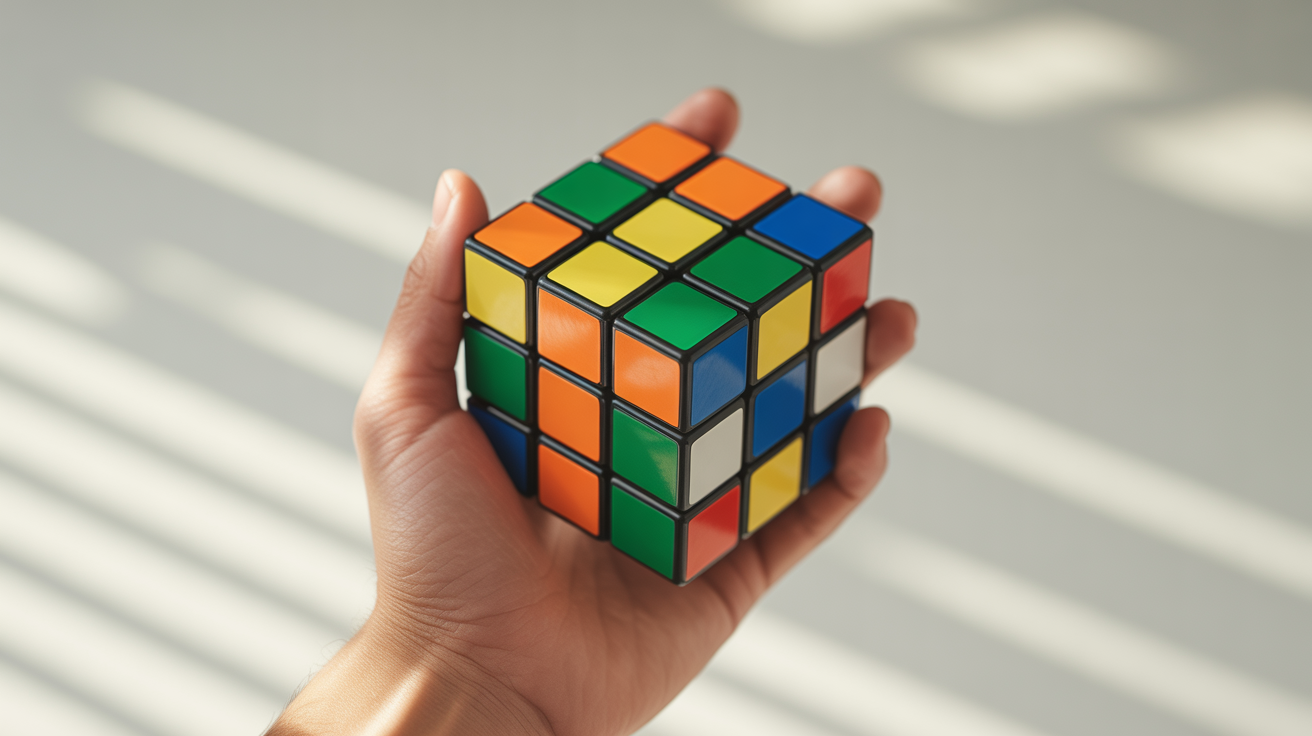
Before you can time a solve, you need a scrambled cube, and not just any scramble. Grabbing the cube and twisting faces at random until it "looks mixed up" creates a different starting position every time, which makes comparing solves nearly impossible. A scrambler gives you a specific sequence of moves to apply, so every attempt begins from a known, well-randomized state.
Learning to use one takes about five minutes and immediately makes your practice more honest.
What a Scrambler Actually Does
A scrambler outputs a sequence of moves written in standard notation. You apply those moves, one at a time, in order, to a solved cube, and the result is the scrambled position you start your timer from.
The whole point is fairness and reproducibility. In competition, the same scramble is applied to every competitor's cube for a given round, so everyone faces the same puzzle. Computer-generated scrambles are also designed to produce genuinely random-looking states, rather than positions that happen to be suspiciously easy to solve.
WCA Scrambles for 3x3
World Cube Association (WCA) competitions use scrambles generated by specialized software. A typical 3x3 scramble runs around 20 moves. That length is deliberate, shorter sequences risk producing states that an experienced solver can recognize and unwind quickly, which would defeat the purpose of a fair scramble.
You do not need WCA-grade software for everyday practice. Any modern cube timer app (Twisty Timer, csTimer, Cstimer.net) uses a reliable scramble generator that produces scrambles in the same style. They refresh automatically after each solve, so you always have a fresh one waiting.
Reading Scramble Notation
Scramble notation is the same notation used for algorithms, a compact language where each letter names a face and modifiers say how to turn it.
The Six Faces
Each face of the cube has a one-letter name:
- U, Up (top face)
- D, Down (bottom face)
- F, Front face
- B, Back face
- R, Right face
- L, Left face
Move Modifiers
A bare letter (like R) means a quarter-turn clockwise when looking directly at that face. Two modifiers change things:
- Apostrophe (
R'), counter-clockwise quarter-turn - 2 (
R2), half-turn (180 degrees, direction does not matter)
So in a scramble like R U2 F' L2 D R' B2 U F2 L, you would:
- Turn the Right face clockwise (
R) - Turn the Up face 180 degrees (
U2) - Turn the Front face counter-clockwise (
F') - Turn the Left face 180 degrees (
L2) - Turn the Down face clockwise (
D)
...and so on through the rest of the moves.
A Short Example Scramble
Here is a realistic 20-move scramble to get a feel for the format:
R2 U' F2 D L2 B2 D' R2 B2 U2 L' U' B L D' F U R' F' D2
If you apply every move in sequence to a solved cube, you will end up with a position that looks genuinely scrambled. Reverse the sequence (with moves inverted) and you return to solved, which is why self-scrambling by feel never quite matches a properly generated sequence.
How to Apply a Scramble Correctly
Applying a scramble sounds mechanical, but it is easy to make small errors that silently ruin your solve attempt.
Set Your Starting Orientation First
WCA convention for applying a 3x3 scramble is white center on top and green center facing you. Lock this in before you read a single move. If you start with the wrong face forward, every subsequent move acts on the wrong layer, and you end up with a completely different position than intended.
Not all casual practice apps enforce this convention, but picking a consistent orientation and sticking to it matters more than which one you choose. The key is that you do the same thing every time.
Go Slower Than You Think You Need To
Most misapplied moves happen when someone rushes through a scramble. There is no timer running yet, you have unlimited time to go move by move. Read one move, make it, then read the next. Skipping ahead or trying to remember a chunk of moves at once is where transpositions creep in.
If you reach the end and the cube looks suspiciously tidy (or you somehow ended up at a solved state), go back and recheck your starting orientation and each move. Do not start the timer from a wrong scramble, it poisons the data.
Use App-Generated Scrambles
Self-scrambling, turning faces randomly until satisfied, introduces subtle bias. Humans tend to avoid repeating the same face twice in a row and unconsciously drift toward certain patterns. The result is a position that is often less randomized than it appears, and you will never be sure whether a quick solve was genuine skill or a lucky starting state.
Timer apps handle this for you. The scramble appears on screen, you apply it, you solve, and a new scramble is waiting. There is nothing to manage.
For more on reading your results once the solving is actually done, see how to use a cube timer and read your times.
Building Consistent Practice Habits Around Scrambles
Using a scrambler is not just about individual solves, it shapes how useful your practice session is overall.
Why Consistent Scrambles Improve Your Stats
Your average times only mean something if each solve starts from a properly randomized position. A session where half your scrambles were hand-mixed and half were app-generated mixes apples and oranges. The stats you track, whether a single time or an average of five (Ao5), assume each solve started from an equally difficult, equally random state.
Pairing Scrambles With a Practice Routine
Once you understand how scrambles work, you can use them deliberately. Some solvers practice specific scramble types (all cross-edges on bottom, or scrambles that start with the cross already done) to drill weak spots. Apps like csTimer let you filter or set custom scramble types for this purpose.
For a broader look at how to structure this kind of targeted work, a realistic practice routine to lower your times walks through building sessions that actually move the needle.
Common Scramble Mistakes (and How to Avoid Them)
A few habits separate solvers who get clean data from those who wonder why their times feel inconsistent:
- Wrong orientation at the start, always white top, green front (or your chosen fixed orientation) before move one
- Rushing through the sequence, read one move at a time; do not memorize chunks
- Self-scrambling to save time, app scrambles take five seconds to apply; the data quality is worth it
- Starting mid-scramble after an error, if you misapply a move, restart the scramble from scratch
- Ignoring the scramble on tough solves, if a solve feels unusually hard or easy, recheck that the scramble was applied correctly before drawing conclusions
FAQ
Do I need special software to get WCA-style scrambles?
No. Free apps like csTimer and Twisty Timer generate scrambles using the same style of algorithm used in WCA competitions. For casual practice and learning, these are more than sufficient. The dedicated WCA scramble program (TNoodle) is mainly relevant if you are running a competition and need certified scramble sets.
What if I lose track of where I am in a scramble?
Start over. There is no reliable way to pick up mid-sequence after losing your place, the whole point of a scramble is precision. Reset to solved, reread the orientation requirements, and work through it again from move one.
Why do WCA scrambles use around 20 moves?
Research into cube theory established that any 3x3 position can be solved in 20 moves or fewer, this is sometimes called "God's Number." Scrambles near that length are far enough from solved that no quick pattern recognition shortcut applies, which levels the playing field. Shorter scrambles risk producing states that are recognizable or accidentally easy.
Can I use the same scramble twice to compare my times?
Yes, intentionally. Reusing a scramble is a valid drill, especially when you want to compare different solution paths on the same starting position. Just note it in your records so you do not accidentally count it as a fresh random scramble in your stats.
Do slice moves (M, E, S) appear in standard scrambles?
For 3x3, standard WCA scrambles use only the six outer-face moves (U, D, F, B, R, L and their variants). Slice moves and wide moves appear in scrambles for larger cubes (4x4 and up) or one-handed solving, where the notation expands accordingly. If you see an M or Rw in a scramble, confirm which puzzle type the scramble is meant for.