Common Beginner Cubing Mistakes (and How to Avoid Them)
Struggling to solve the Rubik's Cube? These common beginner mistakes are likely the reason, and each one has a simple fix.
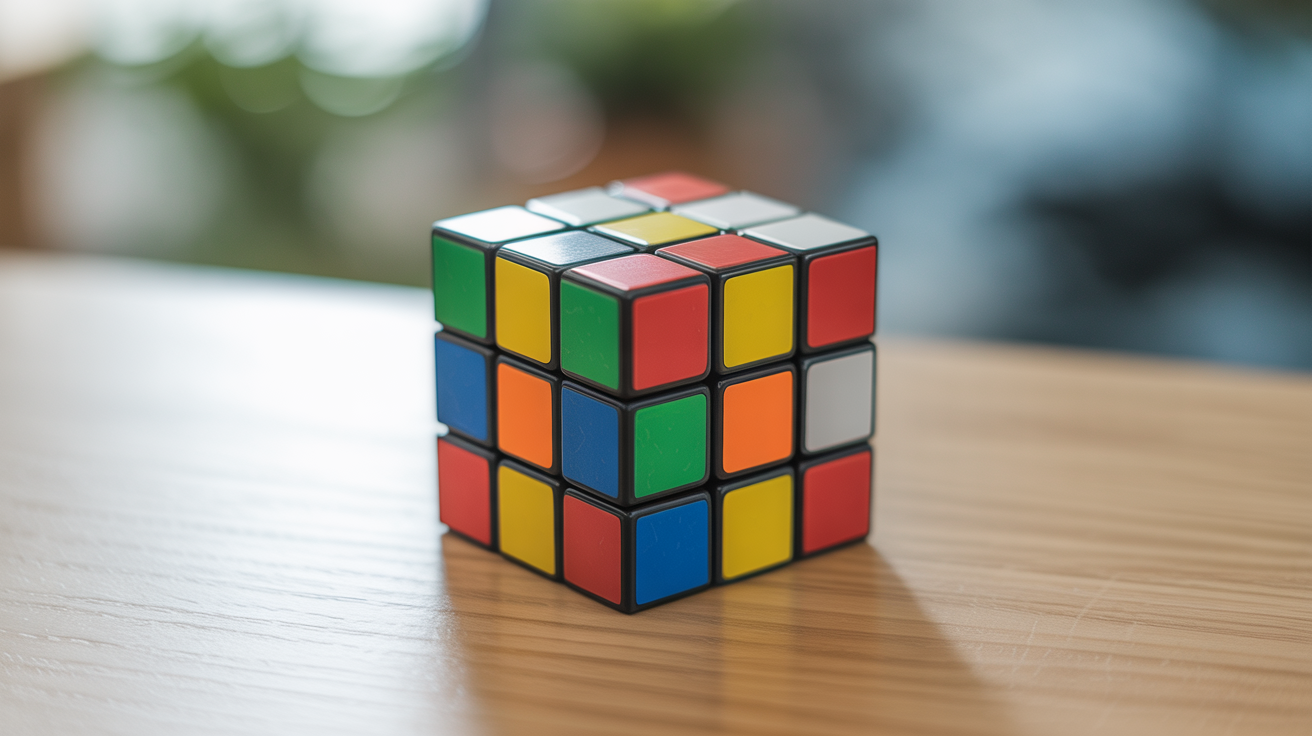
Most beginners who get stuck on the cube are not missing talent or luck. They are making a handful of very predictable mistakes. Fix those, and the solve starts to click.
This guide covers the most common cubing mistakes and what to do instead. If you have been working through the beginner layer-by-layer method and keep hitting a wall, chances are one of these is the culprit.
Trying to Figure It Out Without Learning Algorithms
This is the single most common mistake beginners make. They shuffle the cube, then try to think their way to a solution by intuition alone.
Intuition can get you partway. You might manage the white cross or even the first layer on feel. But beyond that, the cube has over 43 quintillion possible states. No one figures out the rest without a method.
The beginner layer-by-layer method uses a small set of algorithms, which are short move sequences that do a predictable thing every time. You do not need to understand why they work at first. You need to memorize a handful and trust them.
If you are trying to solve without any algorithms at all, stop and learn the method first. Spending an hour memorizing R U R' U' will save you weeks of spinning faces at random.
Misreading the Cube (and Why Piece Types Matter)
A lot of early confusion comes from not understanding how the cube's faces, centers, and pieces relate to each other. Specifically:
- Centers never move relative to each other. The center of each face tells you the final color for that face.
- Edge pieces have two stickers. They belong in a specific slot and must be oriented correctly.
- Corner pieces have three stickers. They can be in the right slot but twisted the wrong way.
A frequent mistake: a beginner places what looks like the correct piece into a slot, but it is twisted or flipped. The algorithm then produces an unexpected result, and they assume they did the algorithm wrong when the piece was wrong to begin with.
Before running any algorithm, verify you have the right piece in the right position and that it is oriented correctly. This step takes five seconds and prevents a lot of frustration.
Performing Moves Too Fast (and Losing Track)
Speed feels satisfying, but it is counterproductive when you are still learning.
When you move too quickly, two things happen. First, you lose track of which step you are on. Second, you accidentally turn a face mid-algorithm and scramble the work you just did. A partial accidental turn is one of the hardest mistakes to spot, because the cube looks almost right but is subtly broken.
Slow down to the point where you can narrate each move as you do it. If you are learning R U R' U', say each move name out loud as you execute it. Once the sequence is muscle memory, your speed will increase naturally.
There is no benefit to rushing during the learning phase.
Forgetting to Check the Setup Before Running an Algorithm
Most algorithms in the beginner method require the piece you are working with to be in a specific position before you start. If the piece is not set up correctly, the algorithm will produce the wrong result.
This is especially common on the second layer. The algorithm for inserting an edge assumes the edge is on the top layer and in a certain orientation relative to the center below it. If you skip that check and just run the sequence, the wrong piece goes into the wrong slot.
Build a habit of pausing before each algorithm to confirm the setup. Ask: is the piece I want in the position the algorithm expects? If not, you may need a setup move first, or you may need to cycle a different piece into the top layer before continuing.
Giving Up After Scrambling a Finished Layer
You finished the first layer. It looks clean. Then you run an algorithm for the second layer and suddenly the bottom layer looks scrambled.
This is supposed to happen. The beginner method uses algorithms that temporarily disturb lower layers, then restore them. If you stop and try to fix the bottom layer manually, you undo everything the algorithm just set up.
The fix is to trust the process. If an algorithm is supposed to take five moves and restore the first layer at the end, let it finish before you judge the result. Interrupting mid-sequence creates more work, not less.
Common Mistakes at a Glance
| Mistake | What It Looks Like | Fix |
|---|---|---|
| No algorithm learning | Spinning faces hoping something works | Learn the beginner method, even just a few moves at a time |
| Wrong piece placed | Slot looks filled but the cube acts broken | Check piece identity and orientation before inserting |
| Moving too fast | Accidental partial turns mid-sequence | Slow down and narrate each move |
| Skipping setup check | Algorithm produces unexpected result | Confirm piece placement before every algorithm |
| Stopping mid-algorithm | Layers look scrambled partway through | Always finish the full sequence before evaluating |
| Trying to fix one thing at a time | Solving sticker by sticker, undoing prior work | Follow the layer order: cross, first layer, second layer, last layer |
Not Keeping Track of Which Step You Are On
The beginner method works in a fixed order. Each layer depends on the one before it. When beginners lose track of which step they are on, they often work on the wrong part of the cube.
A practical way to stay oriented: before each session, solve up to the step you are confident in, then practice only the next step. Do not jump ahead to the last layer until the first two are consistently clean. Rushing through earlier steps to get to later ones means your foundation is shaky and the later steps will not work reliably.
Frequently Asked Questions
Why do I keep undoing my progress when I try to solve the second layer?
You are likely running the algorithm without setting up the piece correctly first, or you are interrupting the algorithm before it finishes. The second layer algorithms temporarily disturb the first layer and then restore it. Let the algorithm complete before assessing the result.
Why can't I solve the Rubik's Cube even after memorizing the algorithms?
Usually this comes down to misidentifying pieces or skipping setup checks. Knowing the algorithm is only half the equation. Knowing when and where to apply it is the other half. Go back to the step where things break down, slow your pace, and verify each piece's identity and orientation before running any sequence.
Is it normal for this to take weeks to learn?
Completely normal. Some people get their first solve in a few days. Others take a month. The algorithms are short, but building the recognition of which algorithm to apply where takes time and repetition. Consistent short sessions work better than occasional long ones.
Do I need a special cube to learn on?
No. Any standard 3x3 cube works for learning the beginner method. If you are curious about what separates a basic toy cube from a speed cube, understanding how the cube works mechanically helps. But you do not need to upgrade your hardware to make progress. The method works on any cube that turns.
How hard is it really to learn the Rubik's Cube?
Harder than it looks, but much easier than most people assume. Most of the difficulty is front-loaded in the first solve. After that, each additional solve reinforces the same patterns. If you want a realistic sense of the learning curve, here is what to expect as a beginner.