How Many Moves Does It Take to Solve a Rubik's Cube?
Learn about God's Number (20 moves), how many moves beginners actually use, and what the difference means for your solving journey.
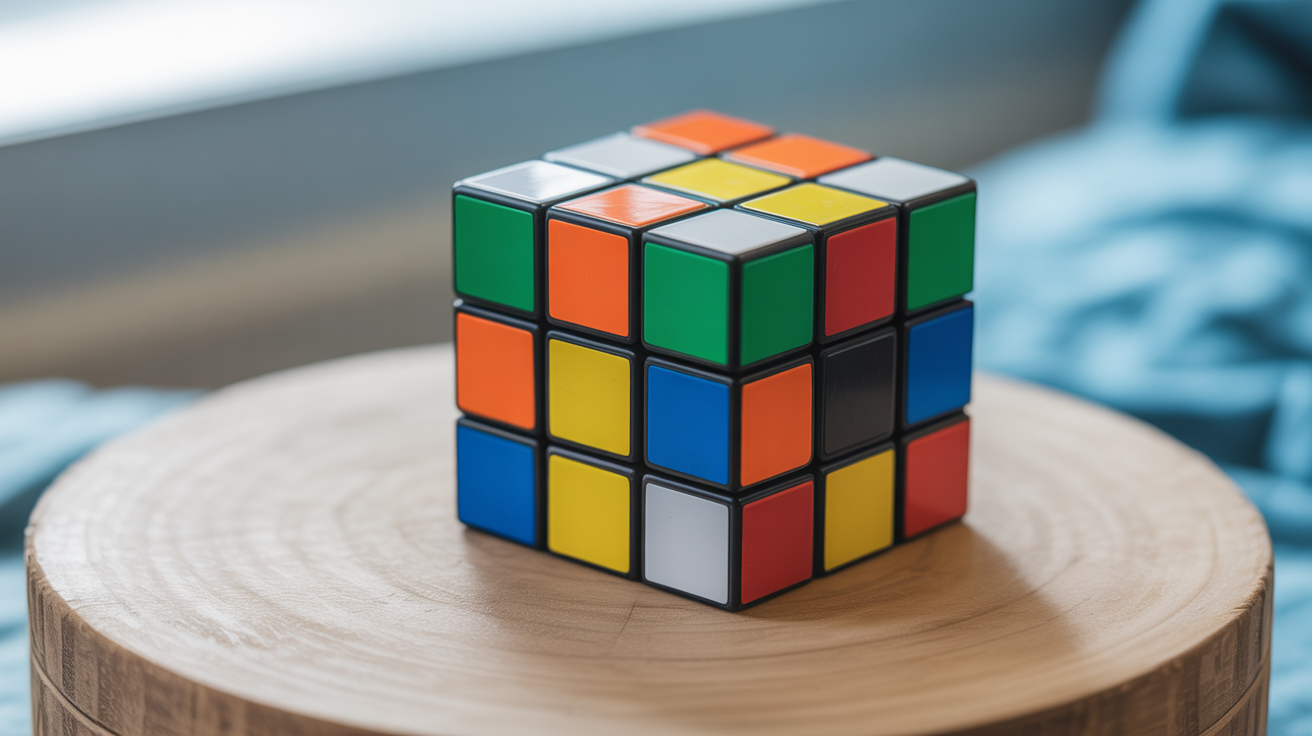
If you've ever watched someone solve a Rubik's Cube in seconds, you might wonder how many moves it actually takes. The answer depends on who's solving and how they're doing it. A computer finding the absolute shortest path uses far fewer moves than a beginner working through a step-by-step method. Both are valid, and understanding the difference helps you set realistic expectations for your own practice.
God's Number: The Mathematical Minimum
Mathematicians spent decades trying to determine the maximum number of moves needed to solve any possible scramble of a 3x3 Rubik's Cube. The question: what is the worst-case scenario?
In 2010, a team of researchers working with Google's computing resources proved the answer is 20 moves. This became known as God's Number, because an all-knowing solver could always find a solution within 20 moves, no matter how scrambled the cube.
To be precise, God's Number of 20 applies to the half-turn metric (HTM), where every face turn counts as one move, whether it's a quarter turn or a half turn. Under the quarter-turn metric (QTM), where only 90-degree turns count, the number rises to 26.
The key insight is that this is the maximum for an optimal solver. Most scrambles can be solved in fewer moves when using the shortest possible path. The average optimal solution length is closer to 17 or 18 moves in HTM.
How Many Moves Beginners Actually Use
God's Number describes theoretical perfection. Real beginners, working through a layer-by-layer method, use a lot more moves.
A typical beginner solve runs somewhere between 100 and 200 moves. This isn't a problem or a sign of failure. Beginner methods are designed to be learnable, not optimal. They break the solve into manageable stages, use a small set of repeatable algorithms, and prioritize understanding over efficiency.
Here's a rough comparison of move counts by solving approach:
| Solver Type | Approximate Move Count (HTM) |
|---|---|
| Optimal computer solver | 17-20 |
| Expert speedcuber (CFOP advanced) | 45-60 |
| Intermediate speedcuber (CFOP basic) | 60-80 |
| Beginner method (LBL) | 100-200 |
As you learn more algorithms and recognize more patterns, your move count naturally drops. This is one of the satisfying parts of the hobby: watching your efficiency improve alongside your speed.
Why Beginners Use More Moves (And Why That's Fine)
The beginner layer-by-layer method solves the cube in stages, typically starting with the white cross, then the first layer corners, then the middle layer edges, and finally the last layer. Each stage uses algorithms that work reliably without needing to see the whole picture at once.
The trade-off is redundancy. Many beginner algorithms move pieces to temporary positions before placing them correctly. A beginner solving the last layer might run a 7-move algorithm, trigger a different case, and run another. An experienced solver might handle the same situation in 12 total moves using a single, longer algorithm they've memorized.
This is exactly why you shouldn't worry about move count early on. The goal at the start is to finish the cube, understand the method, and build the muscle memory. Efficiency comes later as a natural result of learning more algorithms and recognizing more patterns.
If you're still working on understanding how the cube's pieces fit together before diving into algorithms, how does a Rubik's Cube work: faces, centers, and pieces covers the structure in detail.
From 150 Moves to 60: What Changes as You Improve
The jump from beginner-level move counts to intermediate ones comes from two things: better last-layer algorithms and better look-ahead.
Better last-layer algorithms: The beginner method often splits the last layer into four or five separate steps. The CFOP method (the most popular competitive approach) condenses the last layer into two steps using a set of 78 algorithms for OLL (orienting the last layer) and 21 for PLL (permuting the last layer). Learning even a subset of these cuts significant moves.
Look-ahead: Experienced solvers plan several steps ahead while their hands are executing the current one. They're not thinking about what to do next, they're already doing it. This reduces pauses but also often leads to more efficient path choices.
For a practical walkthrough of the beginner method itself, how to solve a Rubik's Cube: a beginner's guide takes you through each stage step by step.
Move Count in Speedcubing Competitions
In competition, solvers are judged on time, not move count. However, move count matters indirectly: fewer moves means less execution time, all else being equal.
Some competitions do include a Fewest Moves Challenge (FMC), where solvers have one hour to find the shortest possible solution to a given scramble. This is a completely different skill from speed solving. FMC specialists use techniques like inverse scrambles and skeleton solving to find solutions in the 20s or even teens. Pulling off a sub-20 FMC solve is considered a significant achievement.
For everyday speed solving, most competitive cubers aim to reduce their average move count gradually as they learn more algorithms, without making it the primary focus.
Frequently Asked Questions
What is God's Number for the Rubik's Cube? God's Number is 20, measured in the half-turn metric. It was proven in 2010 and represents the maximum number of moves any scrambled 3x3 cube requires when solved optimally. No scramble needs more than 20 moves to reach a solved state, provided the solver finds the absolute shortest path.
How many moves does an average beginner use to solve a cube? Most beginners using a layer-by-layer method solve in 100 to 200 moves. The wide range reflects how comfortable someone is with each algorithm and how smoothly they transition between stages. With practice, that number drops as pattern recognition improves.
Can a human actually solve a cube in 20 moves? Rarely, and only in competition with special rules. The Fewest Moves Challenge gives competitors one hour to find a short solution. Top FMC specialists occasionally reach 20 or fewer moves, but this requires deep analytical work, not speed. Standard speed solving focuses on consistent execution, not minimizing every move.
Does a lower move count mean a faster solve? Generally, fewer moves help, but execution speed matters more at most levels. A solver running 55 moves cleanly at high speed will beat one running 70 moves with more hesitation. As solvers advance, they work on both fronts: reducing moves through better algorithm knowledge and increasing turning speed through finger tricks and practice.
Is it worth counting my moves while learning? Not at first. Focus on understanding the method and getting to a solved cube consistently. Once you can solve reliably, tracking your move count per solve gives you a useful signal. If your count is dropping over weeks, you're improving efficiency even if your times haven't changed much yet. Most serious cubers review their solves periodically to spot inefficiency in specific stages. If you're curious whether the cube will give you real challenges as you develop, is the Rubik's Cube hard to learn: what to expect sets realistic expectations for the learning curve.