Speed Cube vs Original Rubik's Cube: What's the Difference?
Speed cube vs Rubik's Cube: how they differ in feel, turning, corner cutting, and magnets, plus which one beginners should actually buy.
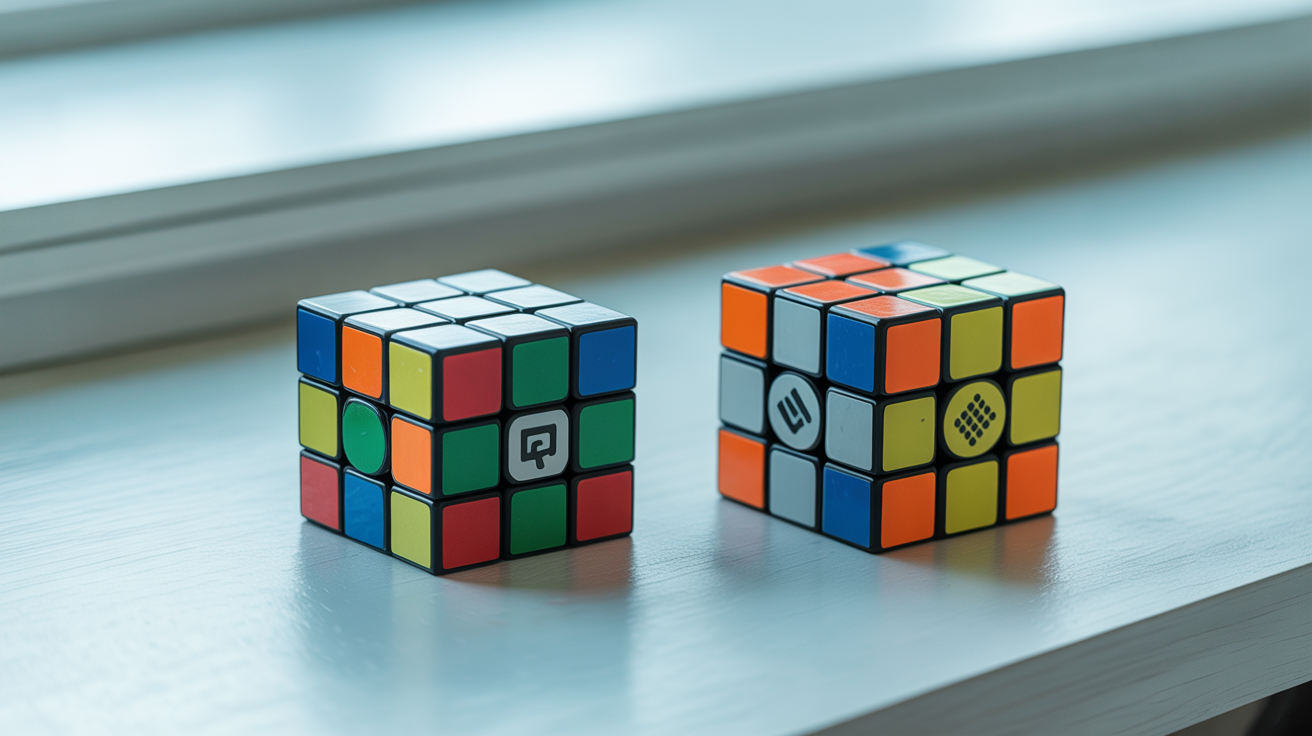
If you've ever grabbed a cheap 3x3 from a toy store and struggled to turn it without the whole thing jamming up, you've already felt the core difference. A speed cube is engineered to move the way you want it to: fast, smooth, and forgiving of slight misalignment. The original retail puzzle was designed to look good on a shelf, not to be solved in under a minute. Understanding what separates the two helps you make a smarter first purchase and avoids a lot of early frustration.
At a Glance
- Speed cubes replace the original's rigid interlocking grip with a looser core-and-feet mechanism built for fast, repeated turning.
- Corner cutting, the ability to complete a turn even when a layer is slightly misaligned, is the single biggest practical difference for a learning solver.
- Magnets snap each layer into alignment after a turn, cutting down on the lockups that derail a beginner mid-algorithm.
- You can absolutely learn to solve on a stock retail puzzle; a speed cube just removes friction while you're learning.
- Entry-level magnetic speed cubes in the $10 to $15 range meet essentially every beginner's needs.
- "Rubik's Cube" is a registered trademark; "speed cube" is a product category made by dozens of manufacturers, and both are legal to use in official competition.
What Is a Speed Cube?
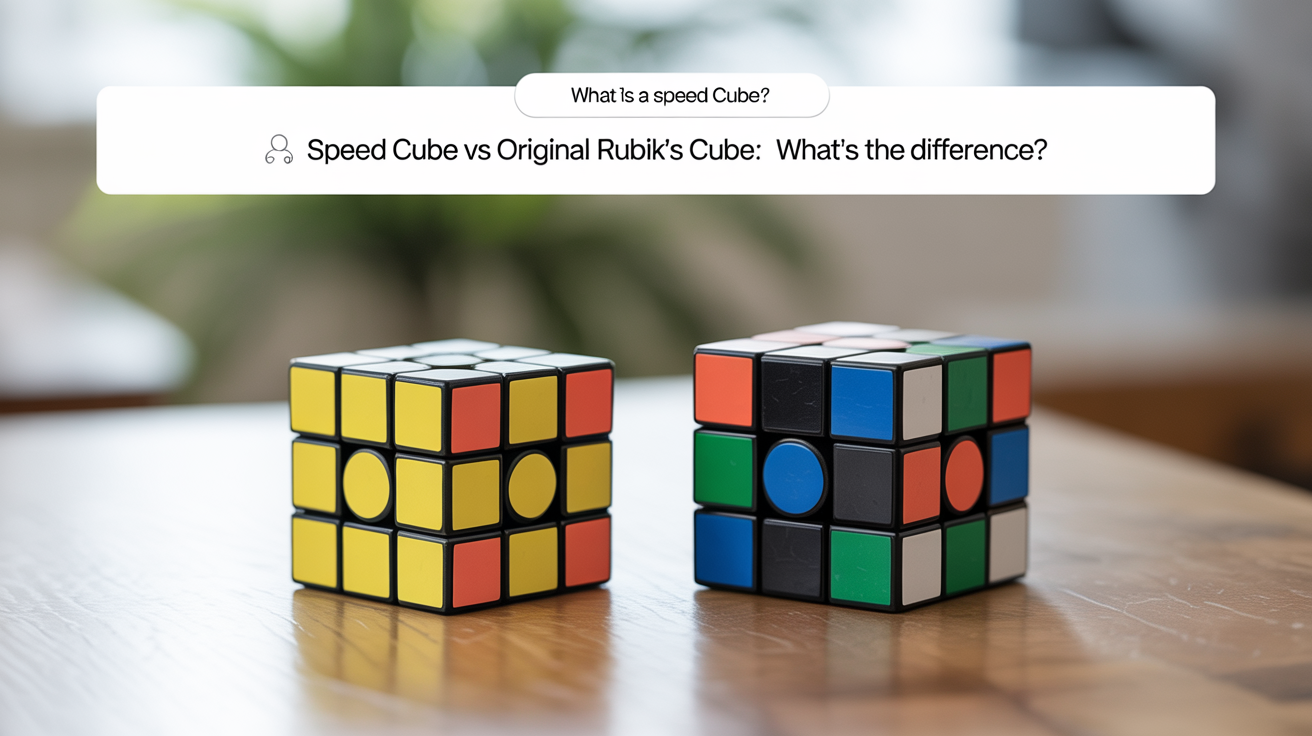
A speed cube is a 3x3 twisty puzzle built specifically for fast, fluid solving. The category covers dozens of brands and price points, but they all share the same core engineering goals: smooth turning, generous corner cutting, and adjustable tension.
How the Mechanism Works
Standard retail puzzles use a basic interlocking piece design. The cubelets grip each other tightly, which keeps them from flying apart during a slow solve but creates a lot of resistance when you try to turn quickly. Speed cubes replace that rigid grip with a looser, more refined mechanism. The internal track system (often called the "core and feet" or "skeleton" design) lets each layer glide past the others without catching.
Most modern speed cubes also include a lubrication system: either pre-lubed from the factory or designed to accept cube lubricant that you add yourself. That slick surface is a big part of why a speed cube feels so different from a stock puzzle the moment you pick one up.
Magnets: What They Do and Why They Matter
The biggest leap in speed cube design over the past decade has been magnetic alignment. Small magnets are embedded inside the pieces, positioned so each layer snaps into alignment when you finish a turn. That satisfying click you feel is the magnet pulling the layer square.
This matters for speed because algorithms (the sequences of moves used to solve the cube) require you to start a new turn the instant the previous one ends. Without magnets, a slightly off-center layer causes the next move to catch and lock up. With magnets, the cube self-corrects in a fraction of a second. For beginners learning a first method, magnets also mean fewer "locks" that derail you mid-algorithm.
Magnet strength varies by cube and is usually measured in grams-force (gf), a scale manufacturers use to describe how hard a magnet pair pulls a layer into alignment. Lighter magnets let a layer glide with less resistance and suit fast, light turners; heavier magnets snap harder and suit solvers who prefer a more locked-in, deliberate feel. Many mid-range and flagship cubes now ship with several swappable magnet strengths in the box so you can tune this yourself rather than being stuck with the factory setting.
Magnets are not a competition workaround, either. The World Cube Association's regulations explicitly list magnets, along with sanding and lubrication, as permitted internal modifications that improve a puzzle's stability. Nearly every speed cube used at official events today is magnetic for exactly this reason.
The Key Technical Differences
| Feature | Original retail puzzle | Modern speed cube |
|---|---|---|
| Turning feel | Stiff, grindy, resistant | Smooth, fluid, light |
| Corner cutting | Little or none (locks up easily) | Generous (20-45° depending on model) |
| Magnets | None | Usually yes (or optional) |
| Tension adjustment | Fixed | Adjustable screws or a dial |
| Lubrication | None (dry plastic) | Factory lube + user-serviceable |
| Stickers | Adhesive stickers that peel | Usually stickerless colored plastic |
| Pop risk | Higher | Very low on quality models |
| Price range | Under a few dollars | Roughly $10-$60+ depending on tier |
Corner Cutting Explained
Corner cutting is the ability of a cube to complete a turn even when the adjacent layer is slightly out of alignment. If you set a layer 15 degrees off-center and push, what happens? On a stiff retail puzzle, nothing happens. It locks solid. On a well-made speed cube, the turn goes through cleanly because the piece geometry is designed to let the corners of each cubie pass by each other.
Speed cubes are often rated by how many degrees of misalignment they can handle. Entry-level options typically manage around 20 to 30 degrees in one direction, while top-tier cubes can push 45 degrees or more. Those numbers sound abstract until you're mid-solve and your U layer lands two degrees off because you rushed the move. On a forgiving cube, the next turn still works. On a rigid one, you get a hard stop and a broken rhythm.
This is one of the most practical differences you'll notice as a beginner. When you're still learning how a Rubik's Cube works and executing moves slowly, your layers won't always land perfectly. A cube that corner-cuts forgives those small errors and keeps moving. One that doesn't will stop you cold at the most inconvenient moments.
Can You Learn to Solve on the Original?
Yes, absolutely. If you already have a retail puzzle, there is no reason to wait before learning. The steps are identical regardless of hardware, and plenty of people learned their first solve on a toy store puzzle with stickers half-peeling off. If you're just exploring whether you enjoy solving, the puzzle you have right now is fine.
That said, once you decide you want to get faster, or simply want a less frustrating experience while learning, a speed cube makes a meaningful difference. The mechanical resistance on a stiff retail puzzle adds friction to every algorithm. You'll spend mental energy wrestling the hardware instead of thinking about the method. A smoother cube lets you focus on the solve.
There's also a subtler issue: a stiff cube trains bad habits. When a puzzle resists you, you start gripping it harder and turning more forcefully to push through lockups. Those habits slow you down later because fast solving is all about light fingertip pressure and quick, relaxed turns. Starting on a cube that rewards light turning is a better foundation, even if you're not yet thinking about times.
For a deeper look at what the solve actually involves, our beginner's guide to solving a Rubik's Cube walks through the full process layer by layer.
Should You Buy a Speed Cube? (And What Kind)
If you're asking this question, the answer is probably yes. Speed cubes are widely available, genuinely affordable at the entry level, and dramatically more pleasant to use than a standard toy puzzle. You don't need to spend a lot to get a good one.
Buying Tiers at a Glance
| Tier | Typical price | What you get | Best for |
|---|---|---|---|
| Entry-level | $10-$15 | Magnetic, factory-lubed, fixed or basic tension | First cube, casual solvers, most beginners |
| Mid-range | $15-$30 | Adjustable tension, refined magnet layout, better factory lube | Solvers chasing sub-1-minute times |
| Flagship | $30-$60+ | Swappable magnet strengths, premium lube, tuned spring sets | Competitive solvers optimizing tenths of a second |
Entry-Level Speed Cubes
Entry-level cubes in the $10-$15 range are a completely different experience from a retail puzzle. They're magnetic, factory-lubed, and will handle everything a beginner needs. Many experienced solvers still use cubes in this price range regularly. For someone learning their first method, an entry-level speed cube is probably the sweet spot.
Mid-Range and Flagship Cubes
As you spend more, you get finer tension control, more sophisticated magnet systems (some cubes let you swap magnet strengths or add extra magnets between corner pieces), better anti-pop geometry, and premium factory lubricants. These differences matter a lot more once you're chasing faster times and squeezing out tenths of a second. For a beginner, they're largely unnecessary.
One thing to keep in mind: "speed cube" is a product category, not a brand name. Many manufacturers make speed cubes, and the market has gotten competitive enough that even budget options from established cube brands are very good. All of them are competition-legal too, since WCA rules permit any brand of puzzle as long as it meets the standard specifications. Read community reviews on cubing forums, look for cubes specifically described as magnetic, and check whether the listing mentions adjustable tension. You'll find something solid without much effort.
Stickers vs. Stickerless
Most retail puzzles ship with adhesive color stickers over white plastic. Those stickers peel, fade, and get grimy fast. Speed cubes are typically stickerless: the plastic itself is molded in the correct color, so there's nothing to peel or replace. Stickerless cubes look cleaner over time and are a bit easier to read quickly during a solve because the colors don't have the slightly raised edge that stickers create. It's a small detail, but it's one more way speed cubes are built with actual solving in mind.
If you're still deciding whether the hobby is worth pursuing at all, this overview of how hard the Rubik's Cube actually is to learn might help you calibrate your expectations before buying anything.
FAQ
Is a speed cube the same as a Rubik's Cube?
No. "Rubik's Cube" is a registered trademark belonging to Rubik's Brand Ltd, referring specifically to the original brand's puzzle. "Speed cube" is a broad category that includes many different brands and models built specifically for fast solving. All Rubik's Cube brand puzzles are 3x3s, but not all 3x3s are Rubik's Cubes. Most speed cubes come from other manufacturers.
Do speed cubes fall apart more easily?
Entry-level speed cubes from established brands are well-built and won't fall apart from normal use. Cheaper no-name cubes can be fragile, but the same is true of low-quality retail puzzles. A well-regarded entry-level speed cube will hold together better than a typical toy-store puzzle because the internal mechanism is designed to handle fast, repeated turning.
Do I need a speed cube to solve the cube at all?
No. Any intact 3x3 puzzle, whether a retail version or a speed cube, can be solved using the same methods. The difference is in how much the hardware fights you along the way. The cube doesn't need to be fast for you to learn the algorithms; it just helps if it isn't actively working against you.
What does "corner cutting" mean in practice?
It means the cube can complete a turn even when the adjacent layer is a few degrees out of alignment. In practice, this prevents the lockups that interrupt your solve when a layer doesn't land perfectly square. The higher the corner-cutting rating (often expressed in degrees), the more forgiving the cube is during fast or imprecise turning.
Is there anything the original retail puzzle does better?
Honestly, not for solving purposes. If you want a display piece, a collector's item, or the specific feel of the original Rubik's brand, that's a legitimate reason to own one. For actual solving practice, a quality speed cube outperforms the standard retail puzzle in almost every mechanical category that matters.
Are speed cubes allowed in official WCA competitions?
Yes. The World Cube Association permits any brand of puzzle, magnetic or not, as long as it meets the standard size and design specifications and hasn't been modified in a way that changes what information it displays to the solver. In practice, the overwhelming majority of competitors use magnetic speed cubes rather than original retail puzzles.