Stickered vs Stickerless Cubes: Which Should You Get?
Stickered or stickerless? Learn the real differences, which is better for beginners, and how to pick the right cube for you.
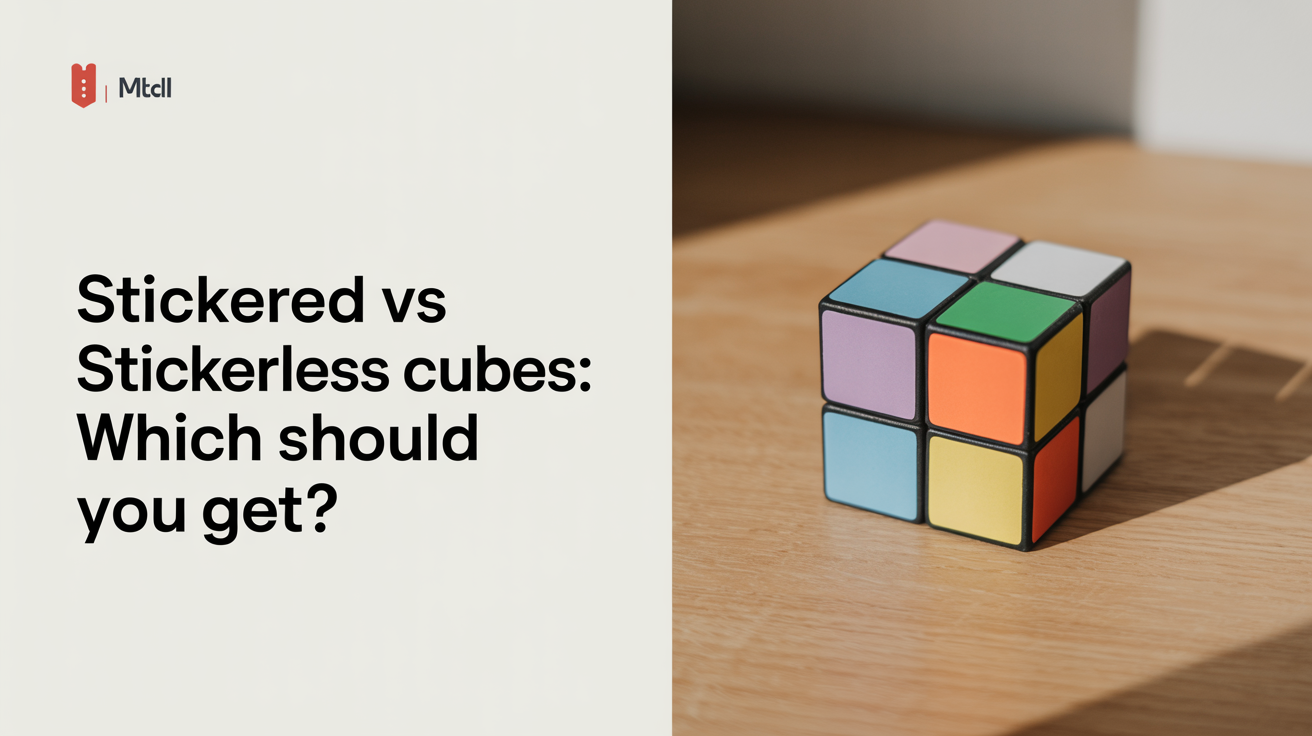
When you start shopping for a speed cube, one of the first choices you hit is stickered vs stickerless. The two look similar on the shelf, but they behave differently over time and suit different solving styles. This guide walks through what each type actually means, the trade-offs that matter for a beginner, and a few things worth checking before you buy.
What "Stickered" and "Stickerless" Actually Mean
A stickered cube has black plastic tiles as its base, with colored vinyl stickers applied on top. The colors you see are the stickers.
A stickerless cube is molded from colored plastic all the way through. There are no separate sticker sheets; the piece itself is the color.
That distinction drives almost everything else about how the two types age and perform.
Do Stickers Come Off Speed Cubes?
This is one of the most common questions beginners ask, and the honest answer is: yes, eventually. Modern sticker sets use better adhesive than budget toy cubes from years ago, so a quality stickered cube will hold up through hundreds of solves without a problem. But stickers do have a lifespan.
With regular use, edges lift and corners peel. The longer you use the cube, the more likely you are to see sticker wear. Peeling usually starts at high-contact corners, the spots your fingers brush during finger tricks and during R and U layer moves.
Replacement sticker sets are widely available and inexpensive, so a stickered cube is not a write-off when the stickers go bad. Swapping a new set takes about ten minutes.
Stickerless cubes skip this maintenance entirely. The color is in the plastic, so there is nothing to peel or replace.
Color Scheme: Does It Matter Which You Pick?
Whether you go stickered or stickerless, you will still choose a color scheme. The standard Western scheme (white opposite yellow, green opposite blue, red opposite orange) is by far the most common and the one used in most tutorials.
For a stickerless speed cube, some sets ship with a brighter, higher-contrast color scheme than older stickered cubes. Bright neon shades of green and orange are popular because they are easier to read quickly under tournament lighting or casual indoor light.
For a stickered cube, the best cube color scheme is simply the one that is easy for you to read. If you plan to follow along with video tutorials, stick to the standard scheme so piece identification matches what the instructor is showing.
One note: some stickerless cubes use a slightly different shade for one or two colors. Check the product photos before buying. If you have any trouble distinguishing certain colors from each other, look for cubes that list "bright" or "primary" color sets.
Stickered vs Stickerless: A Comparison
| Feature | Stickered | Stickerless |
|---|---|---|
| Color source | Vinyl sticker over black plastic | Colored plastic throughout |
| Looks over time | Stickers wear and can peel | Colors stay consistent indefinitely |
| Maintenance | Replace stickers when worn | None required |
| Cost | Often slightly cheaper | Usually a few dollars more |
| Allowed in competition | Yes | Yes (must have all six standard colors) |
| Customization | Easy (swap sticker sets for new schemes) | Harder (would require modding) |
| Beginner-friendliness | Good | Good |
Both types are legal in official World Cube Association competitions. The rules require that a cube has exactly six distinct colors in the standard arrangement. Neither type has a competitive advantage built in.
Which Should a Beginner Choose?
For most beginners, either works fine. Here is a practical way to think about it:
Choose stickered if:
- You want to spend a little less up front
- You like being able to change your color scheme later
- You are buying a puzzle to try solving for the first time and are not sure yet whether you will stick with it
Choose stickerless if:
- You want something low-maintenance that you will not need to touch up
- You are fairly confident you want to keep cubing and want a longer-lasting cube
- You prefer the slightly smoother feel (stickerless cubes often have rounded tile edges compared to raised sticker edges)
If your budget is the deciding factor, the gap between sticker and stickerless on a mid-range cube is usually two to five dollars. That is not a meaningful difference at the quality level most beginners shop in.
The most important variables for a first cube are corner cutting, piece magnet strength, and how the cube feels in your hand during turns. Sticker type is a secondary concern. You can read more about what to look for in how to choose your first speed cube.
Caring for Your Cube Over Time
Whichever type you choose, a few habits help it last longer.
For stickered cubes: avoid getting lubricant on the sticker surface. When you lube the inner mechanism, keep the lube on the track and core, not the faces. Lube breaks down adhesive over time and speeds up peeling at the edges. See how to lube a speed cube and why for a full walkthrough.
For stickerless cubes: the same lube routine applies to the mechanism, but you have no sticker adhesion to protect. The main thing to watch is sunlight. Prolonged UV exposure can fade colored plastic. Storing the cube in a bag or box when you are not using it is enough to avoid this.
For both types: wash your hands before solving. Hand oils accelerate wear on stickers and can discolor plastic over time.
Frequently Asked Questions
Can I switch a cube from stickered to stickerless?
Not really. Stickered cubes have black plastic underneath the stickers, so removing the stickers exposes black pieces rather than colored ones. You cannot convert one type to the other without replacing the plastic tiles, which is not practical. If you want to change your setup, it is usually easier to buy a second cube.
Are stickerless cubes allowed in official competitions?
Yes. The WCA allows stickerless cubes as long as the puzzle has six distinct colors in the standard arrangement and does not provide any unfair advantage. Stickerless cubes are very common at competitions at every level.
Which type do most speedcubers use?
Stickerless is now the dominant choice among competitive solvers, mainly because of durability and low maintenance. That said, some cubers prefer stickered for tactile reasons or color preference, and performance at the top level does not depend on which type you choose.
Do sticker sets fit all cubes?
No. Sticker sets are cut for specific cube sizes and sometimes for specific cube models, because the tile dimensions vary slightly between manufacturers. When buying replacement stickers, check that they list your cube model or at least the brand and size (standard 3x3, 57mm, etc.).
I have magnetic cubes. Does sticker vs stickerless change how magnets feel?
The magnet placement is inside the piece, not on the surface, so sticker type has no effect on how magnets feel during turning. If you are deciding between magnetic and non-magnetic options, that is a separate question worth reading about in magnetic vs non-magnetic cubes: what's the difference.